
Sony
Durandlinjen
Harold Pinter
Günter Grass
N e d
- local index
- local folder
- main folder index
- main folder

- Bagdad
- N e d
- 3747 folder content
- Kabul.html
- Bagdad
- Afghansk resa
- Jan Myrdal
- common
- Durandlinjen
- Mossadeq
- Harold Pinter
- Afghanistan
- Kabul
- Nineve
- solistan 1941
- Günter Grass
- Harold Pinter
- Edward Said
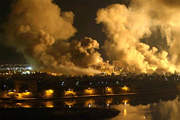 Bagdad april 2003
En fundering i dag:
De som stödde angreppet på Irak, våren 2003, kanske
ångrar sig i dag? (okt 2016)
Jag tror inte det är sannolikt.
Ett vanligt argument för att gå till attack var att 'man kan inte bara hota, man måste
också slå till, eljest blir man inte trovärdig längre'.
Blair lär inte ha ändrat sig.
Men de politiker i Sverige som stödde kriget?

U p p
julen 2002

Iraq debate - Imperial War Museum - 23 rd September 2004.
Freedom, democracy and liberation. These terms, as
enunciated by Bush and Blair essentially mean
death, destruction and chaos.
Tony Blair describes the insurgents as terrorists.
There is clearly a body of foreign nationals which
has entered Iraq since the invasion and which is
committing terrorist atrocities.
But the heart of
the insurgency is widespread Iraqi resistance to a
brutal and savage military occupation. Cutting off
somebody's head is a barbaric act. But so is
the dropping of cluster bombs on totally innocent
people and tearing them apart.
At least 20,000 civilians have been killed in Iraq
and many thousands more mutilated for life. We
don't see the corpses or the mutilated children
on television.
The US invasion of Iraq was not only totally
unjustified, illegal and illegitimate, it was a
criminal act of immense proportions and one which
will have profound consequences throughout the
world.
But the invasion was also quite consistent with
declared American foreign policy. American foreign
policy now aims at ‘FULL SPECTRUM
DOMINANCE' – that is the US
Administration's term, not mine. Full spectrum
dominance means control of air, sea land and space.
It also of course means control of the world's
resources.
The United States has over 700 military
instillations in 132 countries, including this one.
It already has a vast military base at Baghdad
airport. These bases are not there by accident or
for ‘humanitarian reasons'. They are
there to keep a stranglehold on the world and they
will do it by any means at their disposal.
The disclosures of torture in Iraq should come as
no surprise to anybody. The Americans have been
exporting torture for years. They have been
teaching torture techniques to military
representatives of various dictatorships at Fort
Benning in Georgia for a very long time. Fort
Benning was called the School of Americas but was
actually known as the ‘School of
torture'. They practice it themselves at home,
in the vast gulag of prisons across the United
States where over two million people are held in
custody, the majority black. Restraint chairs,
where convicts are strapped and left naked in their
own urine and excrement for days, the use of gas
and stun guns, the random brutality, the systematic
rape and abuse of young men and women – all
of these things and more an affront to human
dignity – are common practice. So torture in
Iraq, at Bagram in Afghanistan, and at Guantanamo
Bay are simply par for the course. That is the
nature of the beast.
But the US is not finding things so easy and the
less easy they find things the more dangerous they
become. But there is a growing resistance worldwide
to this arrogant, brutal, complacent, destructive
force, a force which holds the concept of
International Law and the United Nations in
contempt, and whose only vocabulary is bombs and
death.
The United States possess more ‘Weapons of
Mass Destruction' than the rest of the world
put together. It is at this moment developing new
nuclear systems which it is prepared to use at the
drop of a hat. It is totally indifferent to the
death of others and will murder anyone who gets in
its way. It is the most feared, most powerful and
most detested nation the world has ever
known.
The invasion of Iraq was an act of state terrorism.
So it is Bush and Blair who are in fact the
terrorists. I believe they must be arraigned at the
International Criminal Court of Justice and tried
as war criminals.

Lawrence av Arabien
Uppåt
Irak o Afghanistan
Svensk afghan
Thage G Peterson 2013
a) Afghanistan
b) Pinter
c) Nineve
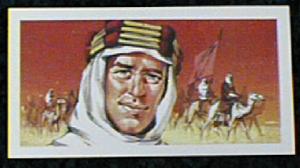
Age of empires
Various invaders conquered the land after Nebuchadnezzar's death, including Cyrus the Great in 539BC and Alexander the Great in 331BC. In the second century BC, it became part of the Persian Empire, remaining thus until the 7th century AD, when it was captured by Arab Muslims (Abbasids). The capital was moved to Baghdad which became an important commercial and cultural centre in the Middle Ages.
Mongol invaders in AD1258 sacked Baghdad and murdered the Abbasid caliph. After much conflict over supremacy, the country was conquered by the Turks in the 17th century and became part of the Ottoman Empire. Turkish rule continued unchecked, and with very little development, until the end of the 19th century.
Källa: Arab Net
Irak
1936
Iraq
'03
Islam
Kissingerplanen
